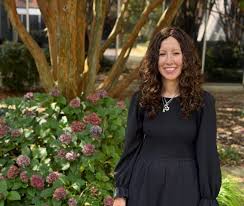

Hallie Miller ‘14, is one of the many Beth Tfiloh alumni involved today in journalism and communications, a staff writer at the Baltimore Banner focused on covering housing in the Baltimore region. A Baltimore native who spent four years at The Baltimore Sun, where she helped lead the paper’s medical coverage of the coronavirus pandemic.
Q: What was your time at Beth Tfiloh like?
“I was [a student at BT] from 2010 to 2014, so the world was really different then. But I remember being academically really challenged, especially in the mix of Judaic and general studies classes, I remember there being a lot of great clubs and social activities to choose from, yes, and I ended up making some of my very best friends. So all in all, I would say it was a very positive experience.”
Q: What sort of clubs and extracurriculars did you do through school?
I was definitely involved in עיתון [newspaper], which was much more casual than what you have today. We put it out once a month, or once a quarter [of the school year] in print. I did Model UN for three years, played outdoor and indoor soccer – I tried lacrosse and did not like it, and one trimester of golf. I sang in the [BT school] choir. We had, like an acapella choir back in the day, which was super popular back then because Pitch Perfect. The movie had just come out, and everybody was super inspired.
Q: And your first out of school journalism experience?
“I had an internship for an employment company that would advertise available job postings, and I was their social media intern. It definitely was busy, and I think that ultimately prepared me for what college and adulthood was like. I can definitely credit BT for that too.”
Q: How did BT help prepare you for college journalism?
“Now, this is a true story, but on one of my first college exams, I think I was the only one to get an A. It was a journalism class – History of journalism, or something like that. And the instructor [was the] only person in the room who knew the material.”
“And someone, figured out that I was the person that did the best, and they asked me, “how did you know what was going to be on the test?” And I was like, “because I read the textbook”. I think BT was serious [about] study[ing], and the tests weren’t going to be easy, and you could challenge yourself academically as much as you could.”
Q: How did BT help prepare you for your career as a journalist?
“[My teachers], Mr. Bruner and Mr. Green are two of the best and I was lucky enough to have them both. [They were] very encouraging of my writing, and they both kept in touch over the years, which I’ve definitely appreciated.”
“Both of them were really good about reading comprehension and making sure we weren’t just writing to write, but writing based on our understanding of the material.”
Q: And how would you describe the different journalism jobs that you’ve held over the years?
“I would say journalism is definitely one of those industries where it’s skills based. So just the more you do it, the better you get at it, and the more confident you become, and the more complicated stories you can take on with more regularity.”
Q: How does your Judaism and journalism coincide?
“I think a huge part of the industry is just trying to figure out fact from fiction, and learning how to decipher and hopefully in doing that, you know, you’re repairing the world a little bit – תיקון עולם [tikkun olam].”
“There are times when people read our stories, whether they’re lawmakers or policy makers or people with power, [and they] make a change because of us. Or even on the micro level, someone might read one of our stories and [will either] donate to donate to a cause, or be extra nice to the people who work in our schools or our nursing homes because of the conditions that they face. [Journalism] is a way to give more people voices and power.”
![[Image of BT vs Cristo Rey, Spencer in scoring position.]](https://kolbt.com/wp-content/uploads/2026/05/Spencer.png)