
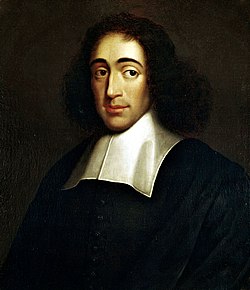
So, let’s talk about Spinoza and Pulp Fiction—two things you wouldn’t normally put in the same sentence. Spinoza, a 17th-century philosopher, had a pretty radical take on miracles. He didn’t believe in them in the traditional sense. For him, what we call a “miracle” isn’t some divine interruption of nature, but just something we don’t fully understand yet. Everything, according to Spinoza, happens according to the laws of nature. So, when something feels miraculous, it’s more about our perspective being limited, not about nature being broken or God stepping in. But once we use reason and logic, Spinoza believed we could understand, because truth is built into the universe itself. And if we’re honest and open enough to look, we’ll see it. It’s not about blind faith—it’s about clarity.
This ties straight into Jules’s and Vincent’s arcs in Pulp Fiction. During the famous scene where a guy shoots at Jules and Vincent, somehow all the bullets miss. Jules calls it a miracle. Vincent brushes it off. After that “miracle” moment, Jules first thinks it’s divine intervention. But what’s powerful is that he starts questioning—not just what happened, but what it means. He starts to treat it like a sign—not from a God who breaks the rules, but from the universe nudging him to change. He says he’s going to “walk the earth,” which sounds kind of vague, but it actually shows how he’s shifting from needing all the answers to accepting that understanding comes with time, reflection, and openness. That’s pretty Spinozist. Jules doesn’t think he knows everything, but he’s now open to the inevitability of truth—he senses that living according to reason and nature is the path forward, even if he doesn’t know exactly where it’ll take him.
Meanwhile, Vincent stays in denial. He doesn’t change, doesn’t reflect, and ends up getting killed. That contrast really lines up with Spinoza’s idea that understanding the world––really seeing how everything fits together—is what leads to wisdom and freedom. Jules stops looking for miracles outside of reality and starts finding meaning within it. That’s Spinoza 101: the miraculous isn’t about magic—it’s about insight.
And here’s the deepest layer: Spinoza himself kind of “walked the earth” in a philosophical sense. He detached himself from religious sects, from identity categories, even from material ambition, because he believed that all people are cut from the same cloth. When Jules asks, “Am I the shepherd? Is Vincent the shepherd? Maybe you’re the shepherd, and I’m the tyranny of evil men” he’s basically wrestling with the same question Spinoza did. Maybe the roles we play are just illusions, and seeing past them is the real miracle.